

The Stem Cell Revolution: Autologous vs. Allogenic Stem Cells
The Stem Cell Revolution: Autologous vs. Allogenic Stem Cells
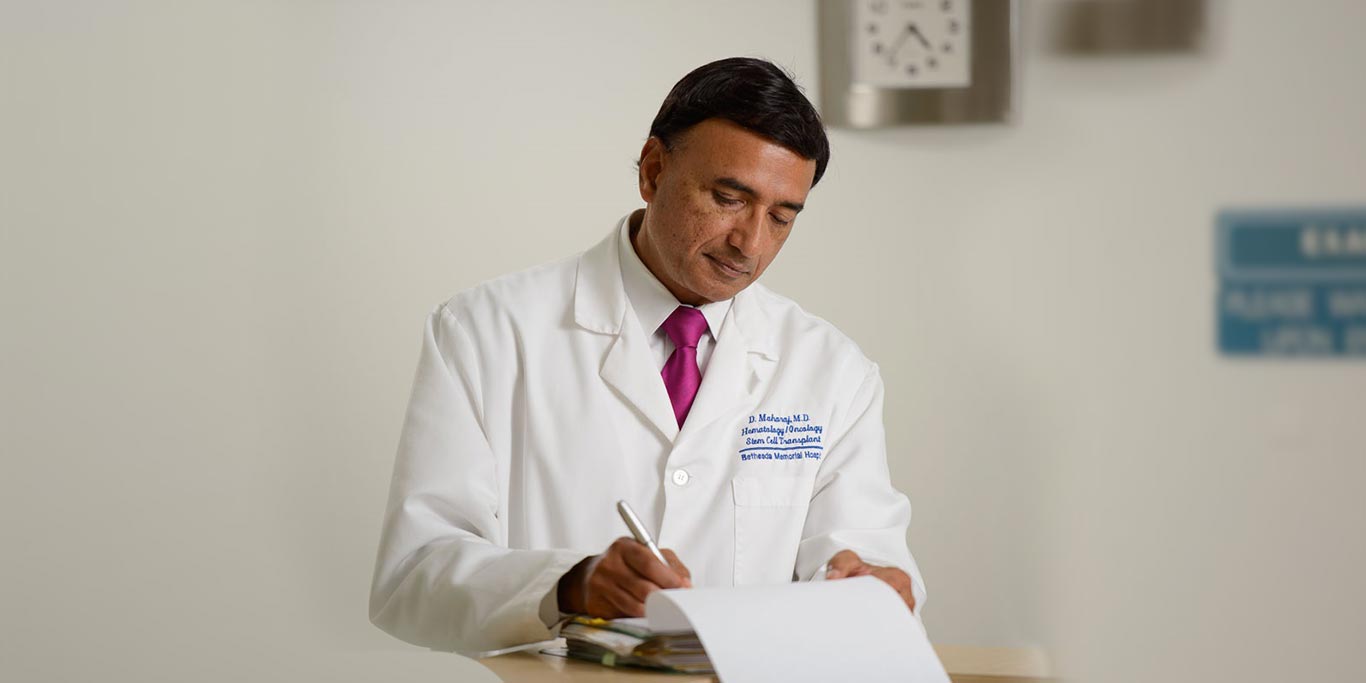
How Dr Maharaj’s work helped to transform an aggressive, experimental cancer procedure into a lifesaving reality for patients across the globe.

Princess Diana showed her support for Glasgow’s advancement in the field as the honorary guest at the opening of the bone marrow transplant unit at the Glasgow Royal Infirmary in 1985.
In this chapter of our series on the origins of the Maharaj Institute, we explore a pivotal turning point in Dr. Maharaj’s career and in blood cancer treatments: the divide between autologous (a person’s own) and allogeneic (a donor’s) stem cell therapies. Picking up from his formative years at Glasgow University, we will retrace the decisive moment he was involved in pioneering autologous stem cell therapy—a breakthrough that would forever alter the landscape of cancer treatment.
In the drafty hospital wards of 1980s Glasgow, a diagnosis of acute leukemia arrived like an unrelenting death sentence. There were no treatments of blood cancers that were allowing patients to survive very long. Standard chemotherapy offered a grim trade-off: flood the body with aggressive drugs to annihilate malignant cells, knowing full well that microscopic roots of disease almost always lay hidden in the shadows. All too often, relapse returned with brutal speed, leaving physicians empty-handed and patients without hope.
At this crucial fork in the road, Dr. Maharaj stood before two futures. He could pursue the quiet certainty of pathology—examining cellular structures behind the safety of a microscope—or step directly into clinical hematology to face the devastating reality of blood, marrow, and lymphatic disorders face-to-face at the bedside.
Pathology provided profound diagnostic answers, but Dr. Maharaj felt an unmistakable calling to patient care. For him, naming the illness was only half the journey; the true calling lay in finding a way to cure it.
Joining the leukemia unit at Glasgow Royal Infirmary, Dr. Maharaj confronted the tragic limits of standard medicine daily. Experimental bone marrow transplants were just emerging, yet these primitive procedures were fraught with extreme danger.
Allogeneic bone marrow transplants, or transplants using donor cells, carry serious risks. For starters, finding a compatible donor—even among close family—was once remarkably rare, leaving many patients with nowhere to turn. It was like searching for a needle in a haystack. But even when a match is found, the danger isn’t over. The donor’s immune cells often view the patient’s body as foreign and attack it, a life-threatening complication called graft-versus-host disease (GvHD). To prevent this internal mutiny, doctors must heavily suppress the patient’s immune system for months, leaving them defenseless against dangerous infections and significantly increasing the risk of organ damage or death.
The high dose of chemotherapy given prior to the stem cells to suppress the immune system was physically demanding. Patients endured severe systemic side effects, including acute gastrointestinal distress and prolonged periods of dangerous immunosuppression that left them highly susceptible to severe infections.
In the early days of trials throughout the 1970s and 1980s, this internal clash was devastating—severe GvHD was directly responsible for treatment-related death rates as high as 20% to 45%. Witnessing the toll of this reaction firsthand on the front lines of clinical trials, Dr. Maharaj and the Glasgow research team felt the same stir to know that the status quo was untenable. He, alongside the research team with their background in pathology, had the training to think critically about the structure of diseases. They knew that the written code in the body’s stem cells is uniquely able to repair itself, and that this unique ability could hold the key to a new treatment.
That led to the development of the use of unpurged autologous bone marrow stem cell transplantation.
The team also made a crucial insight. Harsh chemical purging damages fragile stem cells, delaying immune recovery and leaving vulnerable patients exposed to lethal infections. Determined to find a safer path, Dr. Maharaj and his mentor, Dr. Alan Burnett, asked a groundbreaking question: what if a patient’s own healthy stem cells could be harvested, safeguarded, and later used to regenerate their destroyed immune system? This question was the basis for the autologous stem cell transplant treatment without purging which was different to the therapies being researched at Johns Hopkins and Seattle.

Glasgow University.
Dr. Maharaj’s team advocated for a bolder, cleaner approach: harvest pure stem cells during confirmed deep remission and re-infuse them untreated. Pristine, uninjured stem cells allowed the immune system to rebuild with unprecedented speed and resilience.
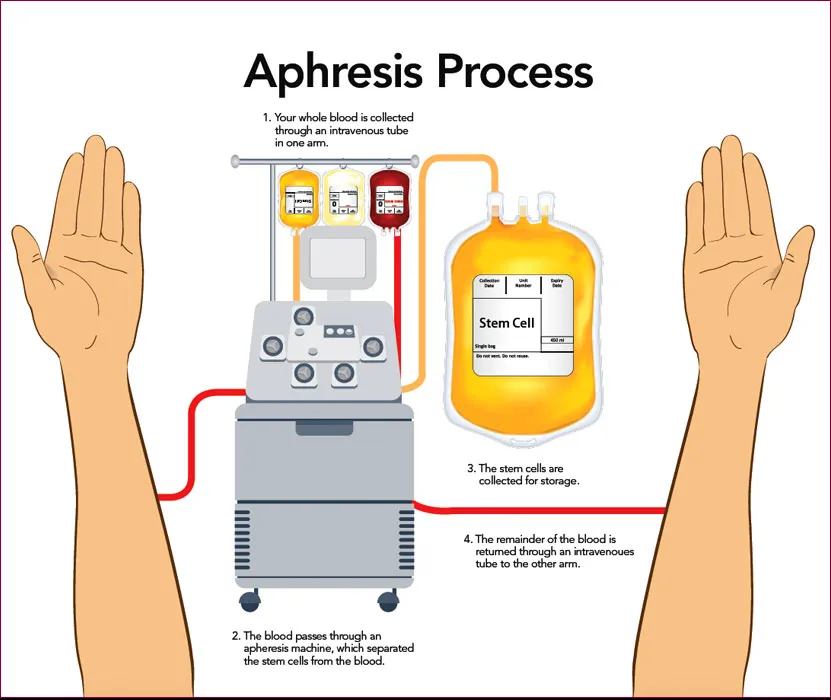
The strategy was daring. The treatment worked like this: Once a patient achieved temporary remission, the research team carefully harvested pristine master stem cells— the body’s master blueprint building cells—from the patient’s bone marrow and preserved them at sub-zero temperatures. With this cellular “life insurance policy” safely stored, oncologists could deliver the maximum doses of chemotherapy needed to kill the majority of cancer cells without fear of permanently destroying the bone marrow. Previous treatments would just blast with chemotherapy without preserving this vital life center, leaving patients defenseless without a way for the immune system to rebuild and protect them against infections once the chemo treatments were over. This greatly affected patients’ survival rates.
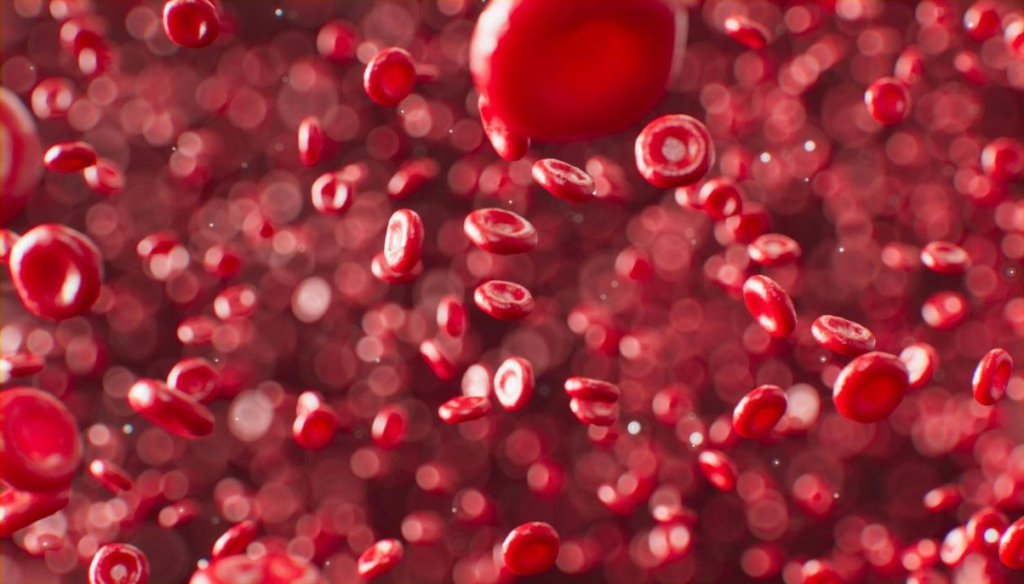
3D Rendering of red blood cells.
The true recovery turning point arrived not in the sterile chill of the lab, but at the bedside, during the weeks after stem cell re-injection. The frozen vials were gently thawed and re-infused through a standard intravenous line; the procedure looked deceptively simple— much like an everyday blood transfusion dripping into an arm. Yet beneath the surface, an extraordinary biological journey was underway. Guided by natural cellular homing, those master stem cells traveled directly back into the hollows of the hip and marrow cavities, taking root in the very terrain that the massive doses of chemotherapy had just laid waste. Within two to four nail-biting weeks, the empty marrow stirred back to life, using the regenerative nature of the patient’s own stem cell structure to produce new healthy red blood, platelets, and white cells and rebuild the immune system from scratch.
That rapid recovery hinged entirely on their refusal to chemically purge the harvest. While the other centers across the world battered their samples with toxic agents in an attempt to weed out cancer, the Glasgow team chose to protect the sheer volume of healthy, uninjured stem cells, relying instead on pre-transplant stem cell culture screening. Returning such a vast army of uncompromised cells allowed the patients’ defenses to rebound with unexpected speed and vigor. As the newly minted immune cells multiplied, they went on the offensive, changing the winning tides by now hunting down the cancer and wiping out the microscopic leukemic blast cells that conventional therapies had left behind. For the physicians and the families watching at the bedside, the numbers told an unforgettable story: across that pioneering first group of twenty-three patients, projected five-year survival leapt to nearly 50%—shattering the grim, near-certain death sentence of the 1% to 2% baseline that had haunted acute leukemia care for decades.
The greatest strength of this approach is its simplicity: it uses the patient’s own cells. That means there is no frantic search for a matching donor, and anyone can receive the treatment. Because the body recognizes the cells as its own, there is zero risk of the immune system attacking healthy organs—a dangerous complication that often happens with donor transplants. This safety net allows doctors to use much stronger, cancer-killing chemotherapy to wipe out hidden disease, and then immediately use the patient’s banked cells to rebuild their bone marrow and immune system from the ground up.
Survival rates like this had not existed previously in bone marrow transplantation, introducing not only a new treatment, but a new framework from which to think about new treatments. The international medical community quickly took notice. When the team published their landmark long-term remission findings in The Lancet, the leading medical journal and publication for ground-breaking research, it sent shockwaves through oncology. Major funding followed, leading to the creation of a state-of-the-art bone marrow transplant unit at Glasgow Royal Infirmary, officially opened during a historic visit by Princess Diana, a major advocate for children’s leukemia. Members of the team also began traveling and speaking at other institutions and teaching other research and medical teams about their new treatment findings. Soon, medical institutions around the world adopted the ‘Glasgow protocol’, expanding its reach to combat lymphomas, multiple myeloma, and other complex hematologic malignancies.
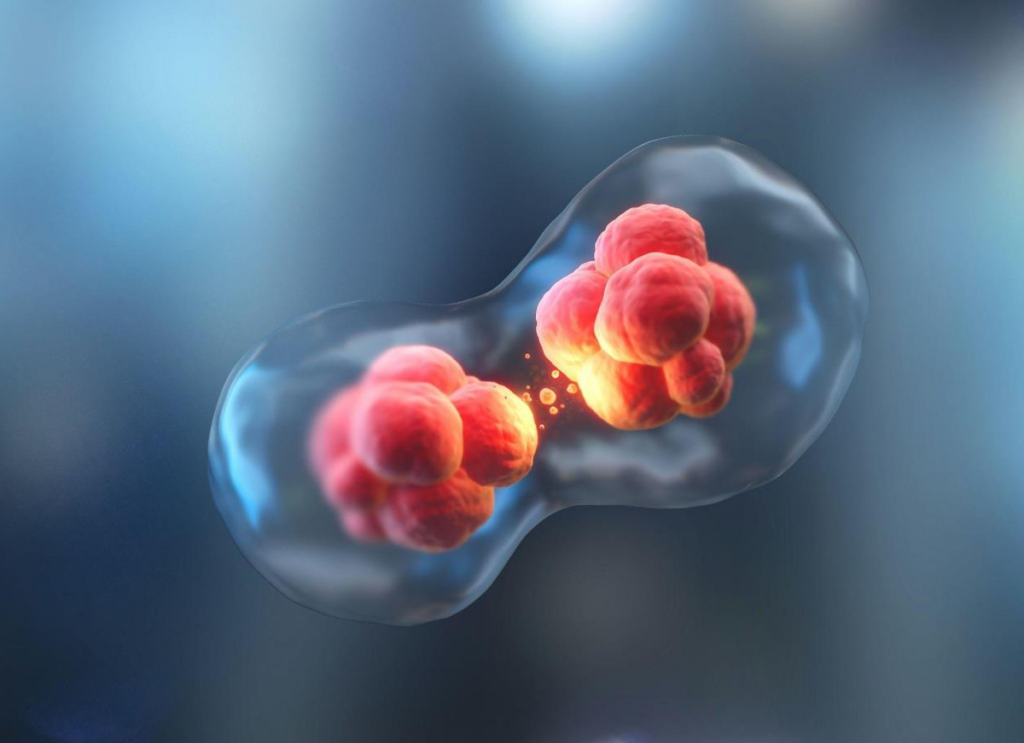
A 3D rendering of a stem cell dividing.
This became the basis of stem cell bone marrow transplantation as it is largely treated today. It led to the next phase of Dr. Maharaj’s medical journey, when he was recruited to the United States to develop the bone marrow stem cell transplant program at the University of Miami.
Never content with the status quo, Dr. Maharaj turned his attention in the mid-1990s to another critical hurdle in patient recovery: the physical and emotional toll of prolonged, isolating hospital stays.
What began in Glasgow as a determined mission to save leukemia patients evolved into a global legacy—a testament to how visionary science, guided by empathy, can fundamentally redefine modern medicine. Today, Dr. Maharaj continues to expand the frontiers of immune health, stem cell preservation, and preventative care.
In our next installment, we follow Dr. Maharaj’s journey to the University of Miami, where his work expanded to focus on the cutting edge of longevity and immune regenerative medicine.
If you are interested in finding out more about stem cells and how harvesting and banking your own stem cells could be an effective investment in your future health, you can connect with Dr. Maharaj directly. Visit the Maharaj Institute website today to learn more or schedule a comprehensive, one-on-one appointment with our clinical team.
Editorial Team: Rayna Carruthers, Bella Maharaj, Kate Kessler, Kurt Whittemore.
Burnett, A. K., Watkins, R., Maharaj, D., McKinnon, S., Tansey, P., Alcorn, M., Singer, C. R. J., McDonald, G. A., & Robertson, A. G. (1984). Transplantation of unpurged autologous bone marrow in acute myeloid leukaemia in first remission. The Lancet, 324(8411), 1068–1070. https://doi.org/10.1016/S0140-6736(84)91508-3
Request An Appointment
Please fill out the form to request an appointment. We will contact you shortly to confirm the exact day/time.
