


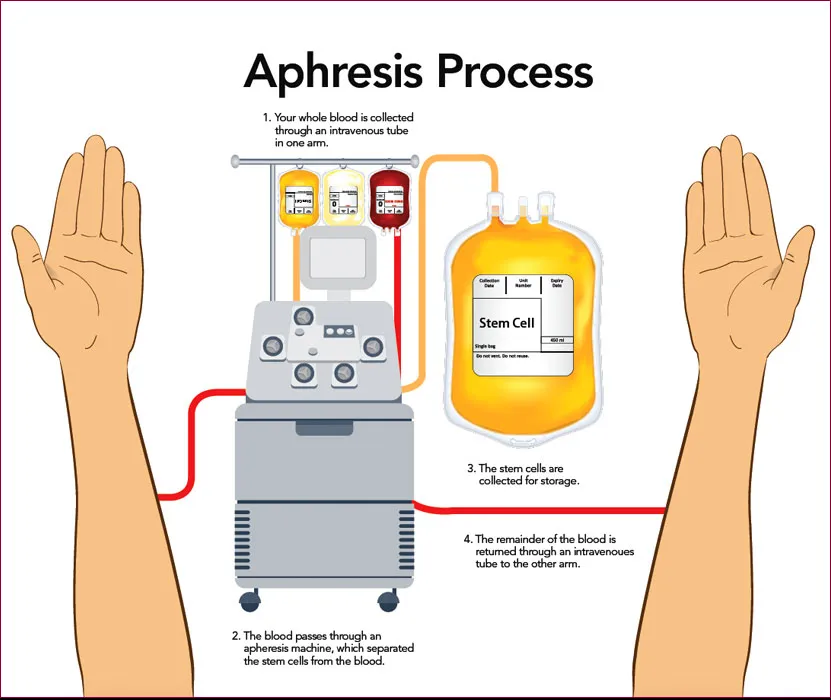
Unlocking the Secrets of Immune Regulatory T Cells: A Nobel-Winning Revolution in Medicine
Unlocking the Secrets of Immune Regulatory T Cells: A Nobel-Winning Revolution in Medicine
By Dr. Dipnarine Maharaj, MD FACP
In October, the Nobel Assembly at the Karolinska Institute awarded the 2025 Nobel Prize in Physiology or Medicine to Mary E. Brunkow, Fred Ramsdell, and Shimon Sakaguchi. Their collective work has deciphered a fundamental secret of our immune system: the existence and critical function of regulatory T-cells (T-regs), a discovery that is reshaping our approach to autoimmune diseases, cancer, and beyond. The Maharaj Institute is at the forefront of leading stem cell technologies and treatments correcting the function of T-Regs in patients.
Our immune system relies on T-cells to act as soldiers, identifying and eliminating threats like viruses. But every powerful army needs a strict command structure to prevent friendly fire. This control center is the thymus, an organ in the chest where T-cells are rigorously tested after being produced in the bone marrow from stem cells.
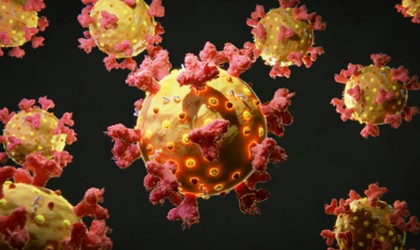
Shimon Sakaguchi discovered that a special class of T-cells graduates from this training with a unique mission. Known as Regulatory T-cells (T-regs), they are the immune system’s dedicated “peacekeepers.” In a landmark experiment, Sakaguchi showed that mice deprived of their T-regs developed severe autoimmune disease, while re-infusing these cells restored health and order. The conclusion was clear: T-regs don’t fight pathogens; they calm other T-cells that mistakenly attack healthy tissue, preventing a destructive civil war within the body.
The story deepened with the work of Mary E. Brunkow and Fred Ramsdell, who discovered the scurfy mutation in mice. This genetic defect cripples the development of T-regs, causing the immune system to spiral into a fatal “mutiny.” Their work provided the genetic blueprint for how this peacekeeping force is built, transforming T-regs from an observation into a defined biological pathway.

For the millions living with conditions like multiple sclerosis, rheumatoid arthritis, or type 1 diabetes, this Nobel-winning science is not abstract, it is the foundation of a new therapeutic paradigm. The goal is no longer just to broadly suppress immunity, but to precisely enhance its natural peacekeeping force. This approach is called personalized precision immunotherapy.
Personalized precision immunotherapy is a pioneering treatment developed by Dr Dipnarine Maharaj at The Maharaj Institute. Dr Maharaj, who is a stem cell transplant immunologist, first used this treatment instead of a toxic bone marrow transplant, in a patient Gale with severe scleroderma who was told that she would need a feeding tube because of the severe contraction of her esophagus caused by the scar tissue formed by the autoimmune disease. By measuring her T cells including her T-regs which were severely reduced and correcting these with non-toxic cytokines which the body normally produces Gale achieved a complete remission which persists to today. Other developmental approaches to utilizing T-Regs include cellular therapies, where a patient’s own stored T-regs or a donor’s are isolated, multiplied into billions in the lab, and rein-fused as a living, targeted treatment to restore immune balance.
Utilizing personalized precision immunotherapy since 2008, many patients with autoimmune diseases have been helped at the Maharaj Institute. One of those patients, Linda B, recalls being told that nothing could stop her Parkinson’s-like illness from progressing. “Instead, I chose to try adult stem cell treatment in Florida. IT WORKED!” she says. “Exactly two weeks into treatment I woke up feeling great. I felt like myself.”
She describes her recovery in simple, powerful terms: “I could do little things that we all take for granted — like rummaging in my purse with my left hand, drying my back with both hands, walking normally again. I don’t want anyone out there to think there is not a treatment. There is.”
Another patient, Linda S, was diagnosed with Corticobasal Degeneration (CBD) — a rare and fatal neurodegenerative disease. Her husband, Jerry, remembers the devastating moment of diagnosis: “We were basically told that there was no hope.”
After traveling from Las Vegas to meet Dr. Maharaj, Linda S began a novel immune-focused treatment that slowed her disease progression and restored significant cognitive and motor function. “You can look at photos from a few years back and see how the life had been drained out of her,” Jerry says. “The treatment Dr. Maharaj administered brought her back to life. I see her motor skills and her ability to think and communicate clearly improving every day.”
The same immune-based approach transformed the life of Gale, a former law enforcement officer battling scleroderma, Raynaud’s, and Madelung’s disease. After years of decline, she began treatment with Dr. Maharaj. “Rather than pursuing a toxic, high-dose chemotherapy-based stem cell transplant,” Dr. Maharaj explains, “we used a novel approach with few side effects to improve her immune function, which resulted in her improvement — which continues.”
“It’s been something that my husband and I could not even have imagined,” Gale says. “I can sleep lying down again, and I can enjoy my favorite foods. It gave me my life back.”

That transformation is echoed by Tony, a retired United States Coast Guard officer, who accompanied his wife for treatment at the Maharaj Institute.
“The entire medical staff was the utmost professional and their ongoing care was nothing short of outstanding,” he says. His wife, who was near the point of needing a permanent feeding tube, showed “significant positive changes” within three months. “Using your own immune system to assist in dealing with illness and disease certainly is the way to go,” he adds. “I predict that stem cell mobilization is the treatment of the future.”
Others, like Aniko and Paul, highlight how the same principles can address chronic inflammatory and autoimmune conditions. Aniko, suffering from psoriasis, and Paul, living with Crohn’s disease, both sought treatment at the Maharaj Institute after conventional therapies had failed to bring lasting relief.

Through the Institute’s personalized precision immune therapy, the goal was to restore immune balance and re-induce self-tolerance, targeting the root of their autoimmune activity rather than merely masking symptoms. Their cases illustrate the broader potential of immune restoration to improve quality of life across a wide spectrum of chronic immune-related diseases.
This Nobel Prize validates a path that the Maharaj Institute of Immune Regenerative Medicine has been pioneering for over a decade. Since 2008, Dr. Dipnarine Maharaj has been at the forefront of personalized precision immunotherapy, leveraging advanced analysis of patients’ peripheral blood immune systems, including their T-regs, to guide treatment for autoimmune diseases.
The laureates’ work provides the fundamental blueprint; at the Maharaj Institute, we are building upon it. This prestigious recognition emboldens our commitment to advancing the understanding of immune regulation and developing the innovative, life-changing treatments of tomorrow. The Nobel Prize does not just honor past discovery—it accelerates the future of medicine, and we are proud to be part of that journey.
Dr. Maharaj is the founder and chief medical Officer of South Florida Bone Marrow / Stem Cell Transplant Institute and its affiliate Stem Cell Cryobank where individuals can store their immune system for future use. He also has the Advanced Stem Cell Education Program for individuals wishing to learn more about the health benefits of Stem Cells.
If you or a loved one would like to measure your immune system from a simple blood test and see how your T-regs are affecting your immune system, please contact Dr. Maharaj at (561) 752-5522 or the Maharaj Institute in Boynton Beach at https://maharajinstitute.com/meet-dr-maharaj/
Request An Appointment
Please fill out the form to request an appointment. We will contact you shortly to confirm the exact day/time.
