


How Did We Get Here? An introduction to the Maharaj Institute and the research that started it
How Did We Get Here? An introduction to the Maharaj Institute and the research that started it

A photo of Dr. Maharaj from the early 2000s published in the Herald, a Scottish newspaper, in an article titled “Meet the Scottish doctor who claims to have developed a cure for all chronic diseases,” published in 2015.
To many, the work we do at the Maharaj Institute can seem elusive, even unfamiliar. Regenerative immune medicine sits at the frontier of clinical science, representing what we believe is the future of healthcare—a key to treating some of the most complex, persistent conditions that have challenged medicine for generations. Because we operate at this leading edge, however, these concepts and therapies are not yet part of everyday conversation.
We want to change that.
Over the coming months, we are launching an editorial series to pull back the curtain on our work. We begin with the journey of our founder, Dr. Dipnarine Maharaj, and the origins of the Maharaj Institute. Breakthrough medicine never happens overnight; the clinical trials and protocols we run today are the result of more than three decades of persistent investigation.
By sharing the turning points, questions, and discoveries that led Dr. Maharaj from the hospital wards of Glasgow to establish the Institute, we will demystify regenerative immune medicine and illuminate what he uncovered decades ago: that the immune system holds the blueprint for renewable health.

A view of Glasgow University from Glasgow Green.
When Dr. Maharaj was completing his medical training at Glasgow University in Scotland in the late 1970s and early 1980s, the country was facing an overwhelming health crisis. Long saddled with the moniker “the sick man of Europe,” Scotland had some of the highest rates of heart disease, cancer, and chronic illness in the world. The medical system was pushed to its limits, and doctors were struggling just to keep up.
Walking the hospital wards as a young physician, Dr. Maharaj noticed a troubling pattern: standard care focused primarily on managing symptoms—such as prescribing pills to lower a fever or ease pain—rather than addressing the underlying illness. Preoccupied with the long-term effectiveness of this approach, he was convinced there had to be a better way to help patients truly heal.
Determined to understand what was happening at a foundational cellular level, he was attracted to the area of pathology—the science of how disease originates and destroys tissue—for its leading ability to molecularly understand and diagnose chronic diseases. He wanted to work with the leading physicians and researchers in what he saw as the most innovative field in medicine. Working directly with microscopes, he realized something crucial: by observing exactly how cells break down, one can determine how to stop the damage at its root.
It was an idea that would become the center of his work. Instead of accepting disease only by its symptoms, he wanted to understand the biological mechanisms beneath them.
That drive to find a real and lasting solution led him to hematology, the branch of medicine focused on blood and the immune system. He joined the team that built the very first bone marrow transplant unit in Scotland.
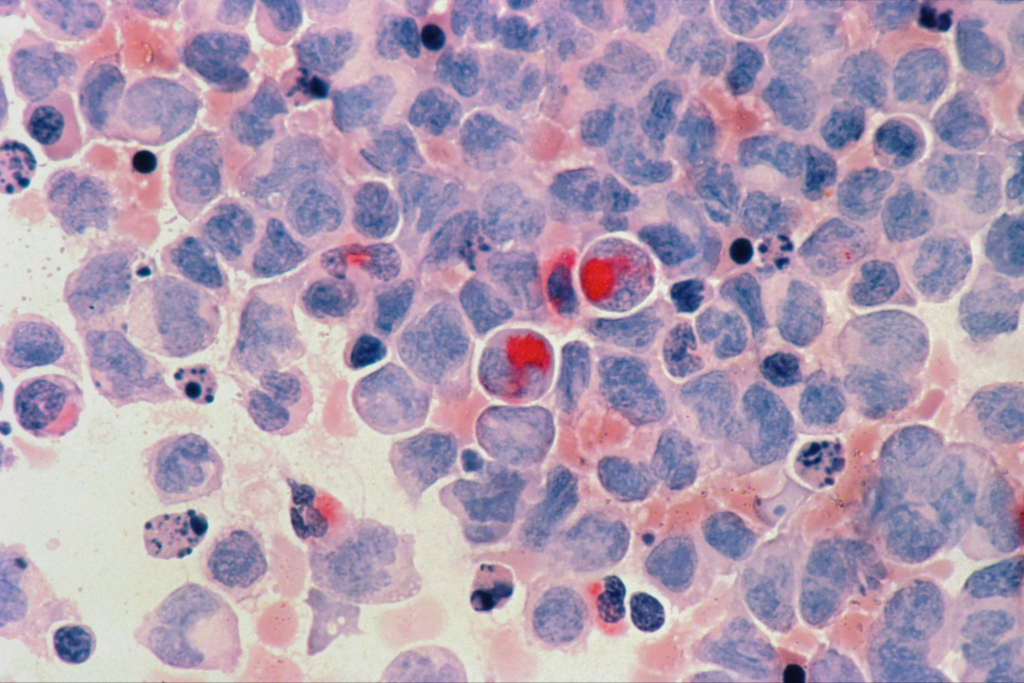
A photo of Acute myelocytic leukaemia.
At the time, bone marrow transplants were entirely experimental. The logic behind the procedure was revolutionary: hematopoietic stem cells in the bone marrow act as the factory that produces all of the body’s blood and immune cells. In diseases like leukemia, that production system goes rogue, churning out cancerous cells. Doctors realized that by clearing out the diseased marrow and infusing healthy stem cells, they could essentially “reboot” the entire immune system.
Patients entering the unit had aggressive leukemias and other blood cancers; having exhausted standard options, they faced dire prognoses. Fully aware of the immense risks, these patients consented to participate in clinical trials, placing their trust in the team in hopes of finding a cure not just for themselves, but for future generations.
The initial results were heartbreaking. In those early days, the team used stem cells taken from healthy donors. Instead of healing the body, however, the donor’s immune cells often attacked the patient from the inside out—a severe, frequently fatal reaction known as graft-versus-host disease. Early on, nearly every patient succumbed to these complications.
These losses weighed heavily on the team. But they reflected a field still in its infancy. Bone marrow transplantation was a newly emerging treatment, and the science of how a donor’s immune system interacts with a patient’s, and the drugs to control that interaction, did not yet exist. Each patient who consented to the trial, and each hard lesson, moved the field closer to the answers that now save lives.
Refusing to give up, the team secured a new drug from researchers in Seattle called cyclosporine to suppress the donor immune cells. It worked: patient survival drastically improved, reducing the mortality rate to between 20% and 45%.
The breakthrough came because the team kept collaborating and seeking solutions when the early outcomes could easily have ended the program. For Dr. Maharaj, the lesson was lasting; in frontier medicine, setbacks are often the questions that lead to the next big discovery.
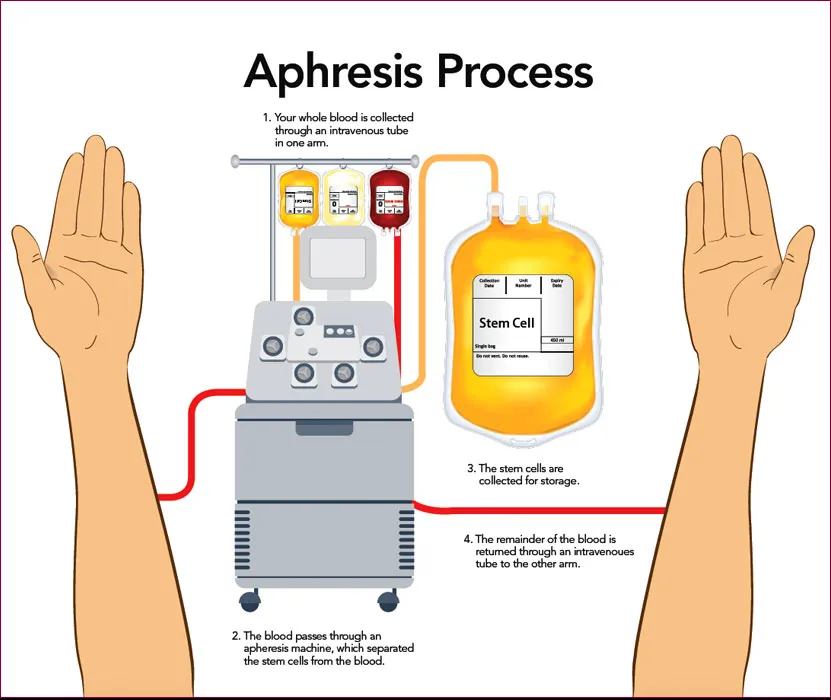
Yet using donor cells remained dangerous and taxing for patients. Dr. Maharaj realized there might be a safer path forward: instead of relying on donor cells, what if they harvested and collected the patient’s own stem cells to rebuild their immune system from within?
To support these advanced treatments, he began using a procedure called plasma exchange (plasmapheresis). This procedure filtered out harmful, diseased plasma and replaced it with a clean, medical-grade fluid called albumin.

Although initial treatments showed promise, another crisis soon emerged in the unit.
Patients receiving the replacement fluid suddenly began collapsing with severe allergic reactions, uncontrollable shaking, and heart complications. On paper, the fluid was certified as pure and sterile. Yet, bottle after bottle, it worsened the condition of critically ill patients.
Dr. Maharaj was perplexed but refused to write this off as bad luck. In search of an answer, he took the bottles straight to Dr. Gordon Fell, a leading Scottish clinical biochemist and expert in analytical toxicology and trace metals, to test the liquid itself.
What they discovered was shocking: the manufactured fluid was contaminated with high, toxic levels of industrial heavy metals—specifically aluminum and nickel. The very medicine meant to stabilize patients was quietly poisoning them.
This discovery changed everything for Dr. Maharaj. He followed the evidence wherever it led, even when it pointed at the very treatment the unit relied on. It reinforced what he had theorized: fixing the body requires looking at the whole picture. Environmental toxins, diet, and hidden chemicals disrupt the immune system over time, leaving us vulnerable to disease.
This marked the beginning of a decades-long journey to redefine how we repair, protect, and rejuvenate the immune system. Every hard-won answer in the clinic unburied deeper questions, proving how much remained to be understood about cellular breakdown and restoration.
From those early years in Glasgow, his conviction still guides the Institute today: treat every setback as information, and never stop asking why.
Over the next five months, we will delve further into this and explore the fundamental medical concepts behind our treatments and practices—principles that have helped hundreds of patients.
From his research at the University of Glasgow and early career in the UK medical system, to his work at Bethesda Hospital in the United States and the founding of his own practice, this series will trace the journey that shaped our mission. Along the way, we will explore the milestones that define our work today—from stem cell mobilization and banking to advanced cryostorage and our pioneering clinical trials in plasma and cellular therapies.
Through this series, we aim to demystify complex medical concepts and make them accessible. Our mission at the Institute is not only to deliver advanced care, but to empower individuals with a fundamental understanding of their own biology.
This series is just the beginning of that conversation. To follow this journey of discovery, subscribe to our Substack and have upcoming installments delivered directly to your inbox.
In the meantime, you can explore our previous articles, where we unpack foundational concepts in immunology—including regulatory T cells, the focus of the recent Nobel Prize in Physiology or Medicine—and examine real-world applications, such as how Dr. Maharaj treated a patient from Kuwait battling liver cancer.
You also don’t have to wait for the story to unfold to start looking into your own care. If you are curious about what regenerative immune medicine could mean for your circumstances and want to speak with the physician who has dedicated the last three decades to this frontier, you can connect with Dr. Maharaj directly. Visit the Maharaj Institute website today to learn more or schedule a comprehensive, one-on-one appointment with our clinical team.
Request An Appointment
Please fill out the form to request an appointment. We will contact you shortly to confirm the exact day/time.
